Work zone safety is often discussed after a serious crash occurs. The more important question is what agencies, contractors, and equipment providers can do before an incident happens.
There is no single device or policy that can eliminate every risk. Effective prevention begins by recognizing changing conditions early, communicating those conditions clearly, and giving drivers enough time to react.
Michigan’s Approach: Changing Behavior Before a Crash
Michigan offers a useful example of how states are expanding their work zone safety strategies. Its broader Toward Zero Deaths work zone effort combines driver education, real-time travel information, traffic monitoring, and stronger attention to speed and distracted driving.
Michigan has also authorized automated speed enforcement for certain active work zones. The program is designed for qualifying locations where workers are present and are not protected from traffic by a concrete barrier. Drivers traveling at least 10 mph above the posted limit may receive a warning for a first violation, followed by fines for later violations. Implementation has required MDOT to establish the equipment, administration, and enforcement process.
The important idea is larger than the camera itself. Michigan is attempting to change dangerous behavior before speeding results in a collision. Enforcement, advance notification, and public education all reinforce the same expectation: drivers must slow down and pay attention before entering the area where workers and traffic are most vulnerable.
What Other Agencies Are Doing
Transportation agencies across the country are using several complementary strategies to reduce work zone risk:
- Queue detection and warning: Radar or other sensors detect slowing and stopped traffic. Portable changeable message signs then warn approaching drivers before they reach the back of the queue.
- Dynamic speed management: Speed feedback signs and variable speed limits respond to actual traffic conditions instead of relying only on a fixed sign.
- Automated enforcement: Cameras can supplement traditional enforcement in locations where speeding creates a repeated danger to workers and motorists.
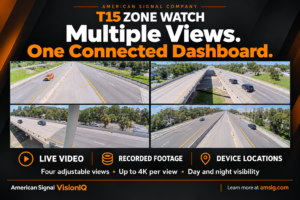
- Real-time monitoring: CCTV cameras, connected devices, and traffic-management centers help operators identify backups, incidents, and changing lane conditions sooner.
- Traveler information: Construction schedules, travel times, detours, and incident alerts allow drivers to make better decisions before reaching the work zone.
- Performance measurement: Agencies study crashes, speeds, queues, and delays to determine whether a traffic-control plan is working and how future projects can be improved.
PennDOT, for example, identifies queue warning, dynamic lane merging, variable speed limits, automated enforcement, and performance measurement as tools used in smarter work zones. Federal guidance also emphasizes traffic monitoring, incident management, and work zone intelligent transportation systems.
The Back of the Queue Deserves Special Attention
One of the most dangerous locations may be outside the physical limits of the work zone. When congestion grows, the end of the queue can move upstream and appear around a curve, beyond the crest of a hill, or farther from the original warning signs than expected.
A static sign can warn that road work is ahead, but it cannot always tell a driver that traffic is stopped two miles beyond it. That is where real-time detection and portable message signs become especially valuable. The warning can move with the hazard and change as conditions develop.
Our View: Detect, Communicate, and Respond
At American Signal Company, we believe incident prevention depends on three connected actions:
- Detect the risk early. Radar, traffic sensors, cameras, and connected equipment can identify speed changes, growing queues, and other developing hazards.
- Communicate the danger clearly. Portable changeable message signs should give drivers a specific, timely warning while they still have enough distance to slow down safely.
- Respond as conditions change. Remote monitoring and control allow operators to update messages, review equipment status, and adapt the warning system as traffic conditions evolve.
Technology is not a substitute for a well-designed traffic-control plan, properly trained crews, attentive drivers, or enforcement. It becomes most effective when these elements work together.
Prevention Starts Before the First Vehicle Arrives
A safer work zone begins during planning. Agencies and contractors should identify where queues are likely to form, examine sight distance and traffic volumes, establish response thresholds, and determine how warnings will reach drivers as conditions change.
The objective is not simply to tell motorists that construction is ahead. It is to recognize a developing risk and deliver the right information early enough to prevent that risk from becoming an incident.
How is your agency or project team working to prevent work zone incidents before they happen?